Trump vows U.S. help in settling Sudan war, at request of Saudi crown prince.
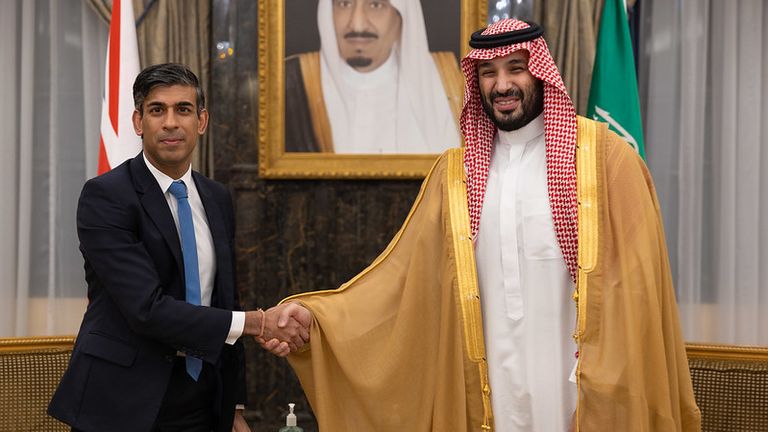
In a significant and somewhat unexpected foreign policy pivot, President Donald Trump declared on Wednesday that the United States would dramatically escalate its involvement in efforts to broker peace in Sudan, a nation ravaged by a brutal civil war. The President explicitly stated that this decision was made at the personal request of his "very good friend," Saudi Crown Prince Mohammed bin Salman. The announcement, delivered during the U.S.-Saudi Investment Forum at the prestigious Kennedy Center in Washington, D.C., followed a lengthy Oval Office meeting between Trump and the Crown Prince, often referred to as MBS, just the day prior.
Speaking to an audience of business leaders and dignitaries, President Trump acknowledged that intervening in the protracted Sudanese conflict "was not on my charts to be involved in that." However, he quickly added, "His majesty would like me to do something very powerful having to do with Sudan… But I just see how important that is to you and to a lot of your friends in the room, Sudan, and we’re going to start working on Sudan." The declaration was met with enthusiastic applause, underscoring the forum’s pro-Saudi sentiment. Trump further emphasized the swiftness of his administration’s response, claiming work had commenced on the initiative within half an hour of his meeting with MBS concluding on Tuesday.
The civil war in Sudan, which has now raged for two and a half years, represents one of the world’s most dire humanitarian crises. The conflict pits the Sudanese Armed Forces (SAF) against the paramilitary Rapid Support Forces (RSF) in a devastating power struggle that has shattered the nation. Millions have been displaced from their homes, with estimates now reaching over 12 million people, both internally and across borders, making it the largest displacement crisis globally. Famine conditions are widespread and escalating, threatening the lives of countless Sudanese, particularly children. Reports from humanitarian organizations and international observers also detail horrific claims of genocide, mass atrocities, and systematic sexual violence, particularly in regions like Darfur, evoking chilling parallels to past conflicts. The United Nations has unequivocally labeled the situation in Sudan as the "greatest humanitarian crisis on Earth," a stark testament to the scale of human suffering.
While the U.S. State Department had previously indicated ongoing diplomatic efforts with international partners, including Saudi Arabia, Egypt, and the United Arab Emirates, to facilitate an end to the war, President Trump’s personal intervention signifies a profound shift. These earlier efforts had involved direct engagement with both the RSF and the Sudanese army, urging them towards a humanitarian truce and de-escalation. However, Trump’s statement suggested a more direct and assertive approach, driven by a personal commitment rather than a purely bureaucratic foreign policy directive. His declaration that he viewed the situation "differently now than I did just a day ago" implies a direct influence from MBS that reshaped his administration’s priorities concerning the African nation.
The context of this new commitment is deeply intertwined with the robust and often controversial relationship between President Trump and Crown Prince Mohammed bin Salman. Trump has consistently championed his bond with MBS, frequently highlighting the "great wealth" Saudi Arabia is channeling into the U.S. economy. During Tuesday’s Oval Office meeting, MBS announced an astounding increase in Saudi investments in the U.S., projecting a total of nearly $1 trillion, up from an initial $600 billion. This massive financial influx, alongside a "historic" and "strategic" defense agreement, underpins the transactional nature of their alliance. The defense pact involves the sale of extensive U.S. military equipment to the Saudis, a move that solidifies strategic ties but also draws scrutiny given the kingdom’s involvement in regional conflicts and its human rights record.
Indeed, the Crown Prince’s visit to Washington was marked by significant fanfare, including a military jet flyover and an elaborate White House dinner, yet it was also shadowed by persistent controversies. Foremost among these is the 2018 assassination of journalist and dissident Jamal Khashoggi, which U.S. intelligence agencies concluded was ordered by the Crown Prince himself. Despite these findings, President Trump staunchly defended MBS in the Oval Office, asserting that he "knew nothing about" the killing. Trump went so far as to criticize reporters for posing questions about Khashoggi and about Saudi Arabia’s alleged involvement in the September 11, 2001, terrorist attacks. This latter issue remains a painful and active legal battle, with families of the victims suing the Saudi government; a federal judge, after reviewing thousands of pages of evidence, has permitted the families to proceed with their case. These critical issues, which highlight profound human rights concerns and questions of accountability, have consistently been downplayed by President Trump in favor of maintaining strong ties with the Saudi leadership. His praise for MBS’s "incredible" work in "human rights and everything else" during Tuesday’s press conference further underscored this controversial stance.
Analysts suggest that MBS’s request for U.S. intervention in Sudan could serve multiple strategic objectives. It positions Saudi Arabia as a key regional mediator and humanitarian actor, potentially enhancing its international image and influence. For MBS personally, it offers an opportunity to demonstrate his ability to leverage his relationship with a powerful U.S. president to achieve regional stability, thereby solidifying his standing. For Trump, adding Sudan to his list of "peace deals" – a category where he often takes credit for diplomatic breakthroughs – aligns with his self-portrayal as a global peacemaker, even if the actual mechanisms and long-term impacts of such deals are complex and often debated.
However, the path to peace in Sudan is fraught with immense challenges. The conflict is deeply entrenched, fueled by ethnic divisions, control over resources, and the personal ambitions of military leaders. Past ceasefire attempts have routinely failed, and humanitarian aid has been repeatedly obstructed. A U.S.-led initiative, even with Saudi backing, will require sustained, high-level diplomatic pressure, robust enforcement mechanisms, and significant international cooperation to navigate the complexities on the ground. The very nature of Trump’s intervention – prompted by a personal request rather than a traditional foreign policy review – raises questions about its long-term commitment and sustainability.
As the world watches the unfolding tragedy in Sudan, President Trump’s new vow of U.S. help, spurred by his Saudi counterpart, introduces a new, albeit unpredictable, dynamic into the crisis. While the humanitarian need for intervention is undeniable, the geopolitical implications of this transactional diplomacy, especially given the unresolved human rights concerns surrounding the U.S.-Saudi alliance, will undoubtedly be scrutinized by allies, adversaries, and human rights advocates alike. The true test will be whether this high-profile commitment translates into tangible peace and relief for the suffering people of Sudan.