Volcano in Ethiopia erupts for first time in nearly 12,000 years: "It felt like a sudden bomb"
A long-dormant volcano in Ethiopia’s remote northeastern region has dramatically reawakened, erupting for the first time in nearly 12,000 years and sending immense plumes of smoke and ash soaring up to nine miles into the sky. The Hayli Gubbi volcano, situated in the heart of the geologically active Afar region, approximately 500 miles northeast of the capital Addis Ababa and close to the Eritrean border, began its spectacular eruption on Sunday, continuing for several hours and profoundly altering the landscape and atmosphere of the surrounding area.
The eruption of Hayli Gubbi, a volcano that rises approximately 1,500 feet, is a significant geological event, particularly given its location within the East African Rift Valley. This colossal geological feature is a zone of intense tectonic activity where three major plates — the African, Arabian, and Somali plates — are slowly pulling apart. This ongoing continental rifting is responsible for the formation of numerous volcanoes, hot springs, and seismic activity across the region, making it one of the most dynamic geological landscapes on Earth. The unexpected awakening of Hayli Gubbi underscores the powerful and often unpredictable forces at play beneath the Earth’s surface in this volatile zone.
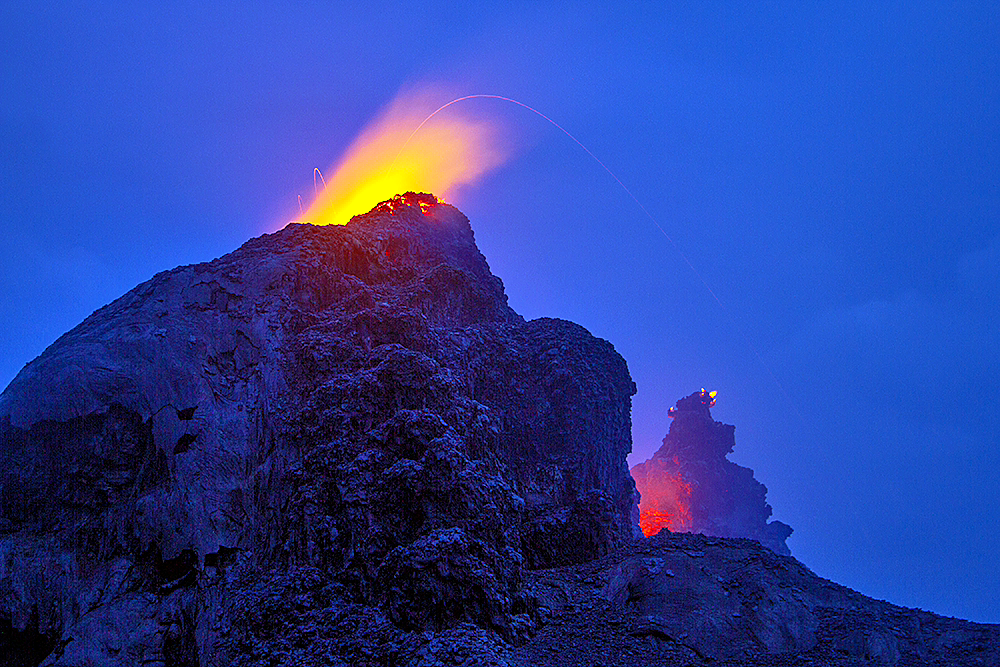
The immediate aftermath of the eruption saw a massive ash cloud propelled high into the atmosphere, a phenomenon quickly monitored by global geological agencies. The Toulouse Volcanic Ash Advisory Centre (VAAC), a crucial body responsible for tracking and forecasting the movement of volcanic ash, confirmed the substantial nature of the event. Their reports indicated that ash clouds from Hayli Gubbi had drifted thousands of miles, spreading rapidly eastward across the Arabian Sea. Countries like Yemen, Oman, India, and northern Pakistan found themselves under the shadow of this immense plume, raising concerns about air quality and potential disruptions to aviation.
Volcanologist and professor at Michigan Technological University, Simon Carn, quickly took to social media platforms, including Bluesky, to confirm the extraordinary reach of the ash cloud. He noted that the ash was "spreading rapidly east in the subtropical jet stream," highlighting the powerful atmospheric currents that carried the volcanic particulate matter over vast distances. Such widespread dispersal of ash can pose significant risks to air travel, as volcanic ash consists of tiny, sharp fragments of rock and glass that can severely damage aircraft engines, reduce visibility, and clog essential systems. Aviation authorities worldwide issue strict warnings and re-route flights to avoid areas affected by ash plumes, underscoring the global implications of such an eruption.
Visual evidence of the eruption quickly circulated on social media, with videos depicting a thick, towering column of white smoke ascending dramatically into the sky. While these images required independent verification, they powerfully conveyed the scale and suddenness of the event, capturing the awe and apprehension of observers. The sheer volume of material ejected into the atmosphere was testament to the immense pressures that had built up over millennia within the volcano’s magma chamber.
The historical context of Hayli Gubbi’s eruption is particularly striking. According to the Smithsonian Institution’s Global Volcanism Program, there have been no known eruptions from Hayli Gubbi during the Holocene epoch, which commenced approximately 12,000 years ago at the conclusion of the last Ice Age. Professor Simon Carn further corroborated this, emphasizing that Hayli Gubbi "has no record of Holocene eruptions." This makes the recent event exceptionally rare and scientifically significant, offering volcanologists a unique opportunity to study the reawakening of a long-dormant system. Such prolonged periods of inactivity often lead to considerable pressure accumulation beneath the surface, which, when finally released, can result in powerful and explosive eruptions. The scientific community will undoubtedly be scrutinizing data from this event to better understand the mechanisms governing long-dormant volcanoes.
While the geological implications are profound, the immediate human impact, particularly on the local communities, remains a primary concern. Mohammed Seid, a local administrator in the Afar region, confirmed that, fortunately, no human casualties had been reported thus far. However, he voiced grave concerns about the potential economic ramifications for the region’s predominantly pastoralist communities. The Afar people, known for their resilience in a harsh desert environment, rely heavily on livestock herding for their livelihoods. The eruption’s ash fall, blanketing vast areas, poses a direct threat to this way of life.
Seid told The Associated Press that the lack of any prior record of an eruption from Hayli Gubbi meant that residents were entirely unprepared for such an event. "While no human lives and livestock have been lost so far, many villages have been covered in ash and as a result their animals have little to eat," he explained. Volcanic ash, while appearing benign, can contaminate water sources, render pastures inedible, and cause respiratory problems in animals that ingest it. For communities whose wealth and survival are intrinsically linked to the health of their herds, this environmental degradation represents a severe economic blow and a looming humanitarian challenge. The long-term recovery of grazing lands will be crucial for these vulnerable populations.
The Afar region is inherently susceptible to seismic activity due to its position within the Rift Valley. This constant geological unrest contributes to the dramatic landscape but also to the unpredictability of natural events. Ahmed Abdela, a local resident, recounted his terrifying experience of the eruption, describing a loud, sudden sound accompanied by a shockwave. "It felt like a sudden bomb had been thrown with smoke and ash," he stated, his words capturing the sheer force and unexpected nature of the event. This vivid eyewitness account underscores the immediate terror and confusion experienced by those living closest to the volcano, highlighting the raw power of nature unleashed after millennia of slumber. The eruption was not merely a visual spectacle but a deeply felt, visceral experience for those in its immediate vicinity, shaking the very ground beneath their feet.
The eruption of Hayli Gubbi serves as a stark reminder of the dynamic nature of our planet and the inherent risks associated with living in geologically active regions. While the immediate focus remains on assessing and mitigating the impact on the local Afar communities and tracking the global trajectory of the ash cloud, the event also presents a rare scientific opportunity. Researchers will now be working to understand what triggered this millennia-long dormant giant to awaken, studying seismic data, ash composition, and ground deformation to unravel the mysteries of its subterranean processes. The challenges ahead include ensuring the safety and sustenance of the local populace, monitoring for any subsequent activity, and learning from this extraordinary geological awakening to better prepare for future events in this remarkably active corner of the world. The Associated Press contributed significantly to the reporting of this unfolding story.