Venezuela launches huge military exercise as U.S. Navy flotilla nears Caribbean waters.
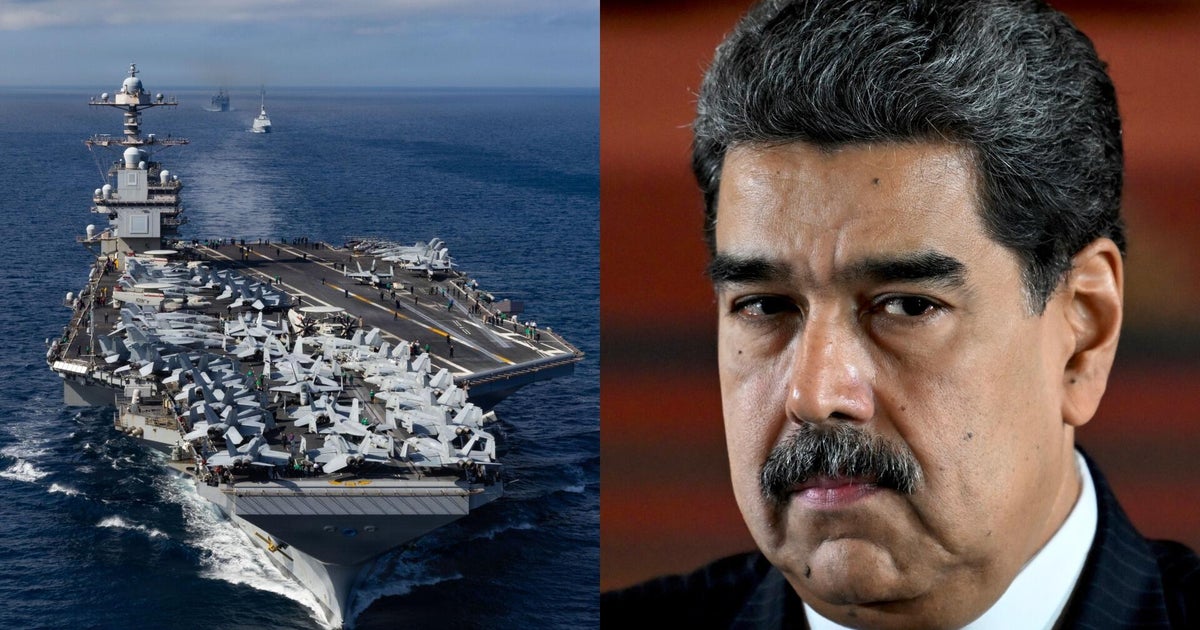
Caracas, Venezuela, November 12, 2025 – In a dramatic escalation of regional tensions, Venezuela on Tuesday announced the launch of a massive nationwide military exercise, reportedly mobilizing some 200,000 forces. This formidable show of strength comes as a direct response to what Caracas perceives as an increasing and provocative presence of U.S. military assets in the immediate vicinity of its sovereign waters. The announcement by the Venezuelan Ministry of Defense coincided with confirmation from the U.S. Department of Defense that the nuclear-powered aircraft carrier USS Gerald R. Ford, a cornerstone of American naval power, had entered the Southern Command’s area of responsibility, a vast zone encompassing the Caribbean Sea.
The Venezuelan military exercise, dubbed "Plan Independencia 200" in a nod to the nation’s bicentennial aspirations for self-determination, involves a comprehensive deployment of land, air, and sea assets across the entirety of the country’s territory. Defense Minister Vladimir Padrino, speaking on Venezuelan state television, confirmed the unprecedented scale of the mobilization, stating that 200,000 troops were actively participating. This figure, as reported by the French news agency AFP, underscores Venezuela’s commitment to demonstrating its defensive capabilities amidst rising external pressure. The objective, as articulated by Venezuelan officials, is to bolster national defense and project a clear message of deterrence against any potential foreign aggression, particularly from the United States. Such large-scale drills are not merely about troop movements; they serve to test logistical capabilities, inter-service coordination, and the overall readiness of the armed forces to respond to a wide array of threats, real or perceived.
Minister Padrino did not mince words in his televised address, directly referencing recent U.S. military strikes on alleged drug trafficking boats in the Caribbean and eastern Pacific. He vehemently accused the U.S. of "murdering defenseless people, whether or not they are drug traffickers, executing them without due process." These accusations highlight a significant point of contention and a critical human rights concern for Venezuela and other regional actors. Since September, U.S. forces have reportedly targeted around 20 vessels in international waters, operations that have tragically resulted in the deaths of at least 76 individuals. The Trump administration has framed these actions as part of a robust anti-drug offensive aimed at disrupting illicit narcotics flows. However, the details surrounding these operations remain "murky," prompting questions about their legality under international maritime law and the rules of engagement, especially when human lives are lost without apparent judicial oversight. The lack of transparency regarding these strikes has only fueled suspicion and criticism from nations like Venezuela, which view them as extrajudicial killings.
At the heart of the U.S. military buildup is the USS Gerald R. Ford, the world’s largest and most technologically advanced aircraft carrier. Its entry into the Southern Command’s domain is a significant strategic move. The USS Ford, a marvel of modern naval engineering, is the lead ship of its class, boasting cutting-edge propulsion systems, advanced electromagnetic catapults (EMALS), and an enhanced flight deck designed for increased sortie generation rates. Its presence signifies a substantial projection of power. On board, the Ford carries an array of formidable aircraft, including four squadrons of F/A-18 Super Hornets, an electronic F-18 variant squadron, Airborne Warning and Control Systems (AWACS) for surveillance, two Helicopter Sea Combat Squadrons for anti-submarine warfare and search and rescue, and a logistics support squadron. This formidable air wing, combined with the carrier’s accompanying destroyers, cruisers, and submarines (forming a Carrier Strike Group), represents an overwhelming offensive and defensive capability. The shift of this powerful asset from the U.S. military’s Mediterranean Command region to the Southern Command, which encompasses the sensitive waters around Latin America, is a clear signal of Washington’s intensified focus on the region. Adding to this formidable deployment, the U.S. has also positioned F-35 stealth warplanes in Puerto Rico and deployed six other U.S. Navy ships in the broader Caribbean, further cementing its military footprint.
The underlying motive behind this escalating military pressure, many believe, extends beyond mere anti-drug operations. Both inside Venezuela, including President Nicolas Maduro himself, and among international observers, there is a strong conviction that the increased U.S. military presence is ultimately "aimed at forcing Maduro out of office." This sentiment is rooted in a long history of strained relations between Washington and Caracas, characterized by U.S. sanctions, diplomatic isolation, and repeated calls for regime change. While President Trump has not explicitly stated regime change as his primary intention, his rhetoric consistently suggests that "Maduro’s days in office are numbered." He has repeatedly accused Maduro of being complicit with armed criminal gangs involved in drug smuggling into the U.S., accusations that the Venezuelan leader vehemently rejects as a pretext for intervention.
This narrative of impending regime change has found vocal proponents within the Venezuelan opposition. Ambassador James Story, a former top U.S. diplomat who served in President Trump’s first term and continued under President Joe Biden, openly stated in an interview with 60 Minutes last month that the U.S. "could oust Maduro by force." This startling admission from a seasoned diplomat underscored the seriousness with which military options are being considered. Echoing this sentiment, David Smolansky, a prominent Venezuelan opposition leader currently living in exile, told CBS News’ Margaret Brennan that he "strongly" believes Maduro’s days are numbered. Smolansky revealed that he and fellow opposition leader Maria Corina Machado, a Nobel Peace Prize-winner, are in "constant and fluent communication with the [Trump] administration," expressing their conviction that "the transition could happen soon." Such statements from opposition figures, coupled with the U.S. military buildup, only serve to heighten the perception in Caracas that an intervention is a tangible threat.
The historical context of U.S.-Venezuela relations is crucial to understanding the current standoff. For over two decades, under the leadership of Hugo Chávez and then Nicolas Maduro, Venezuela has been a consistent ideological adversary of the U.S. Washington has long viewed the socialist government in Caracas as authoritarian, corrupt, and a destabilizing force in the region. This animosity manifested in a series of economic sanctions, first targeting individuals and then expanding to critical sectors of the Venezuelan economy, particularly its oil industry. The U.S. also played a pivotal role in recognizing opposition leader Juan Guaidó as Venezuela’s legitimate interim president in 2019, further isolating Maduro’s government diplomatically. These measures, while inflicting severe economic hardship on the Venezuelan populace, have failed to dislodge Maduro, leading to the current situation where military pressure appears to be the next, more aggressive, tool in Washington’s arsenal.
The implications of the U.S. anti-drug operations and the broader military posture are not lost on Venezuela’s neighbors. Colombia, a traditional U.S. ally in the fight against narcotics, has voiced serious concerns. President Gustavo Petro of Colombia on Tuesday issued a directive ordering his country to cease sharing intelligence with the U.S. "The directive," Petro stated on X (formerly Twitter), "will remain in force as long as the missile attacks on boats in the Caribbean continue." Petro emphasized that "the fight against drugs must be subordinated to the human rights of the Caribbean people," directly challenging the U.S. approach. In an exclusive interview with CBS News in October, Petro had already condemned the strikes against boats as "illegal and ineffective," highlighting a significant rift in regional anti-drug strategies and underscoring the potential for the U.S. actions to alienate key partners. Colombia’s stance adds another layer of complexity, indicating that the U.S. may not have unanimous regional support for its more aggressive tactics.
Against this backdrop of escalating military maneuvers and diplomatic tensions, Defense Minister Padrino’s warning to foreign troops resonated with a defiant resolve. Should there be a U.S. military attack on Venezuela, he declared in his televised remarks, foreign troops would find a "community united to defend this nation, to the death." This statement is a stark reminder of the potential human cost of any military intervention and serves as a call for national unity within Venezuela. The Maduro government, despite facing immense internal challenges including a severe economic crisis and humanitarian hardship, has consistently sought to rally its base around the narrative of national sovereignty and resistance against imperialist aggression.
The current situation represents a perilous moment for regional stability. The deployment of significant military assets by both the U.S. and Venezuela in close proximity creates a high potential for miscalculation or unintended escalation. The "murky" nature of the U.S. anti-drug operations, combined with the explicit calls for regime change from some U.S. officials and Venezuelan opposition figures, paints a picture of a region teetering on the brink. The international community watches with bated breath, hoping for de-escalation through diplomatic channels, but aware that the current trajectory points towards an increasingly volatile future for U.S.-Venezuela relations and the broader Caribbean basin. The stakes are profoundly high, not just for the two nations involved, but for the entire geopolitical landscape of Latin America.
CBS News deputy foreign editor Jose Diaz Jr. contributed to this report.