Israel launches new strikes in Gaza after reported attacks against IDF troops
Israel’s military on Saturday, November 22, 2025, announced it had launched a series of targeted airstrikes against Hamas installations and operatives within the Gaza Strip. These actions followed what the Israel Defense Forces (IDF) described as multiple security incidents and reported attacks against its troops, marking a significant and perilous escalation in the fragile ceasefire that had been in effect since October 10. The renewed aerial bombardment quickly exacted a heavy human toll, with health officials in Gaza reporting at least 14 people killed and another 45 wounded, a grim tally that included numerous children.
The latest wave of hostilities represents a critical test for the already precarious truce, which has seen similar outbreaks of violence since its inception. The IDF provided a detailed account of the events precipitating the strikes. In one key incident, the military stated that an "armed terrorist" exploited a road specifically designated for humanitarian aid entry into the territory to cross the "yellow line." This demarcation is a crucial buffer zone established as part of last month’s ceasefire agreement, intended to delineate the Israeli-controlled border area from a designated safe zone within Gaza. According to the IDF, the individual proceeded to open fire on Israeli soldiers before being engaged and killed by return fire from the military. No IDF injuries were reported in this particular confrontation. The Israeli military characterized this incursion as a "blatant violation of the ceasefire agreement," asserting that its subsequent strikes were a direct and necessary response against "Hamas terror targets in the Gaza Strip."
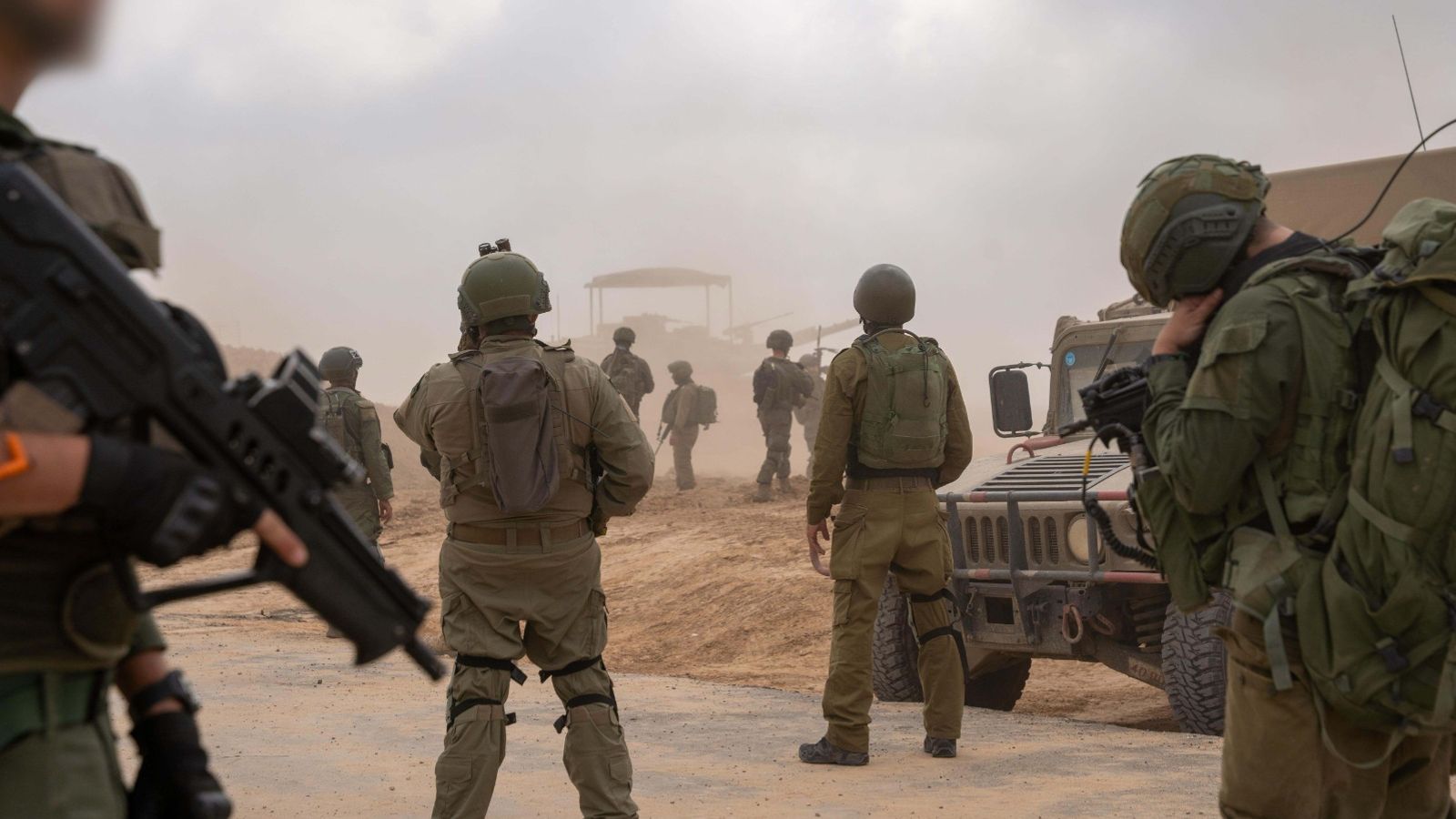
Further underscoring the day’s heightened tensions, the IDF released a separate statement detailing additional confrontations. Israeli soldiers reportedly killed three "terrorists" in the Rafah area, located in the southern part of the Gaza Strip. In two distinct incidents in northern Gaza, two more individuals were shot and killed after allegedly crossing into Israeli-held territory and advancing towards soldiers. These multiple engagements across different sectors of the border indicate a coordinated or at least widespread challenge to the ceasefire’s integrity from the Israeli perspective.
The ceasefire, brokered after intensive diplomatic efforts involving international mediators, was intended to bring an end to a period of intense conflict and facilitate humanitarian relief for Gaza’s besieged population. However, its implementation has been consistently fraught with challenges, characterized by mutual accusations of breaches and a persistent cycle of low-level violence. Each side views the "yellow line" and the broader terms of the agreement through a different lens, leading to interpretations that often clash and ignite new rounds of fighting. For Israel, the "yellow line" is a critical security perimeter designed to prevent infiltration and protect its communities from attacks. For Palestinians, especially those living in proximity to the border, the zone often restricts access to agricultural land and contributes to a sense of confinement.
The humanitarian impact of Saturday’s strikes was immediate and devastating. Rami Mhanna, managing director of Shifa Hospital, a key medical facility in Gaza, confirmed that one Israeli strike specifically targeted a vehicle in Gaza City’s densely populated Rimal neighborhood. This single incident alone resulted in the deaths of seven Palestinians and left 18 wounded. Dr. Mohamed Abu Selmiya, the hospital director, gravely noted that the majority of those wounded were children, highlighting the tragic toll on Gaza’s most vulnerable population. The medical infrastructure, already severely strained by years of blockade and previous conflicts, struggled to cope with the sudden influx of casualties.
Further reports from health facilities across the Strip painted a grim picture of widespread suffering. Near Al-Awda Hospital in central Gaza, a strike on a residential house reportedly killed at least three people and injured 11 others. In the Nuseirat refugee camp, also in central Gaza, another house strike claimed the life of one child and wounded 16 others. Al-Aqsa Hospital, situated in Deir al-Balah, confirmed that three people, including a woman, were killed in a strike targeting a private residence in the area. These accounts from medical personnel and local authorities underscore the indiscriminate nature of aerial bombardments in densely populated areas and the profound civilian cost of renewed conflict. The images emerging from Gaza, depicting injured civilians being rushed to overwhelmed hospitals and scenes of "utter destruction," serve as a stark reminder of the ongoing humanitarian crisis.
Hamas, the militant group that governs the Gaza Strip, swiftly condemned the Israeli actions in a strongly worded statement. The group accused Israel of a "blatant violation" of the ceasefire agreement and further alleged that Israel was deliberately "altering the terms of the deal." Hamas issued an urgent appeal to the United States, urging Washington to "fulfill its commitments, compel the occupation to implement its obligations, and confront its attempts to undermine the path toward a ceasefire in Gaza." This appeal highlights the critical role international actors, particularly the United States, are seen to play in upholding or undermining regional stability and the terms of any truce. Hamas’s statement suggests a belief that Israel is exploiting ambiguities in the agreement or unilaterally expanding its operational parameters, threatening to unravel the entire framework for de-escalation.
The renewed violence immediately drew concerns from the international community, although specific reactions were still developing. Organizations like the United Nations, the European Union, and various Arab nations have historically called for de-escalation and strict adherence to ceasefire agreements in the region. The current events will undoubtedly intensify diplomatic efforts to prevent a complete collapse of the truce, which could precipitate a broader and more devastating conflict, further exacerbating the already dire humanitarian situation in Gaza. The geopolitical implications are significant, as any major escalation could destabilize the wider Middle East and complicate ongoing efforts towards regional peace and security.
Gaza, a small, densely populated coastal enclave, has endured years of an Israeli and Egyptian blockade, which has crippled its economy and left its infrastructure in ruins. Essential services such as clean water, electricity, and healthcare are perpetually on the brink of collapse. Unemployment rates are among the highest in the world, and poverty is rampant. The video reference depicting "utter destruction in Gaza" is a grim testament to the cumulative impact of multiple conflicts and the severe restrictions on reconstruction materials. The entry of humanitarian aid, even through designated routes, remains a complex and often politicized issue, failing to meet the overwhelming needs of the population. The current strikes threaten to undo any incremental progress made in recent weeks towards alleviating civilian suffering and rebuilding shattered lives.
The recurring cycle of violence between Israel and militant groups in Gaza has proven exceptionally difficult to break. Each incident, whether a rocket launch from Gaza or a retaliatory Israeli strike, carries the potential to ignite a wider conflagration, fueled by deep-seated historical grievances, security fears, and a profound lack of trust on both sides. The October 10 ceasefire, while celebrated as a temporary reprieve, never fully addressed the underlying issues that drive the conflict, such as the ongoing occupation, the blockade, and the absence of a viable political horizon for Palestinians. Without a comprehensive and lasting political solution, temporary ceasefires remain inherently fragile, constantly vulnerable to collapse from individual acts of violence or perceived breaches.
As the IDF affirmed that its Southern Command troops remain deployed in accordance with the ceasefire agreement and reiterated their commitment to "continue to operate to remove any immediate threat," the future of the Gaza truce hangs precariously. The international community watches nervously, aware that the immediate path forward depends critically on both sides’ willingness to exercise restraint, adhere strictly to the agreed-upon terms, and engage in meaningful dialogue to prevent another devastating spiral into conflict. The tragic events of November 22 serve as a stark and urgent reminder of the extreme volatility of the Israeli-Palestinian conflict and the urgent need for a durable peace.