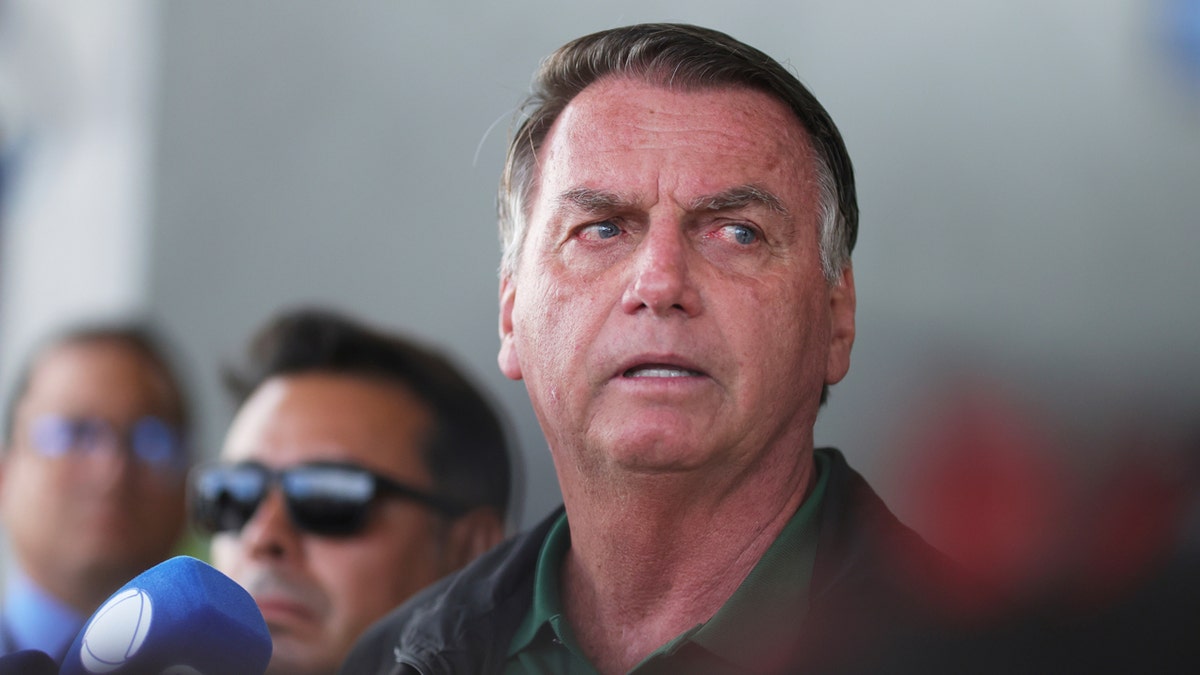
Jair Bolsonaro, Brazil’s former president, arrested days before starting decades-long prison sentence. Brazil’s federal police preemptively arrested former President Jair Bolsonaro on Saturday, November 22, 2025, just days before he was scheduled to commence a landmark 27-year prison sentence. The unprecedented detention stems from his conviction for orchestrating and leading a brazen coup attempt against the nation’s democratic institutions. Officials confirmed the early morning operation, which saw the embattled former leader transported from his residence to the federal police headquarters in the capital, Brasilia.
The arrest, executed around 6 a.m. local time, marked a dramatic turning point in a protracted legal saga that has captivated Brazil and drawn significant international attention. Andriely Cirino, a close aide to Bolsonaro, confirmed the details of the arrest to The Associated Press. The federal police, in a terse official statement that notably refrained from explicitly naming Bolsonaro, indicated that the action was carried out at the direct request of Brazil’s Supreme Court. Neither the federal police nor the Supreme Court offered immediate further details, allowing the news to reverberate across the highly polarized nation.
Bolsonaro, aged 70, had been under house arrest since early August 2025, a measure put in place weeks prior to his formal conviction in the exhaustive coup trial. His legal team had persistently petitioned Brazil’s Supreme Court, arguing vehemently for him to be permitted to serve his extensive sentence from home, citing persistent concerns over his deteriorating health. These appeals, however, ultimately proved unsuccessful in deterring the judiciary’s resolve to uphold the rule of law.
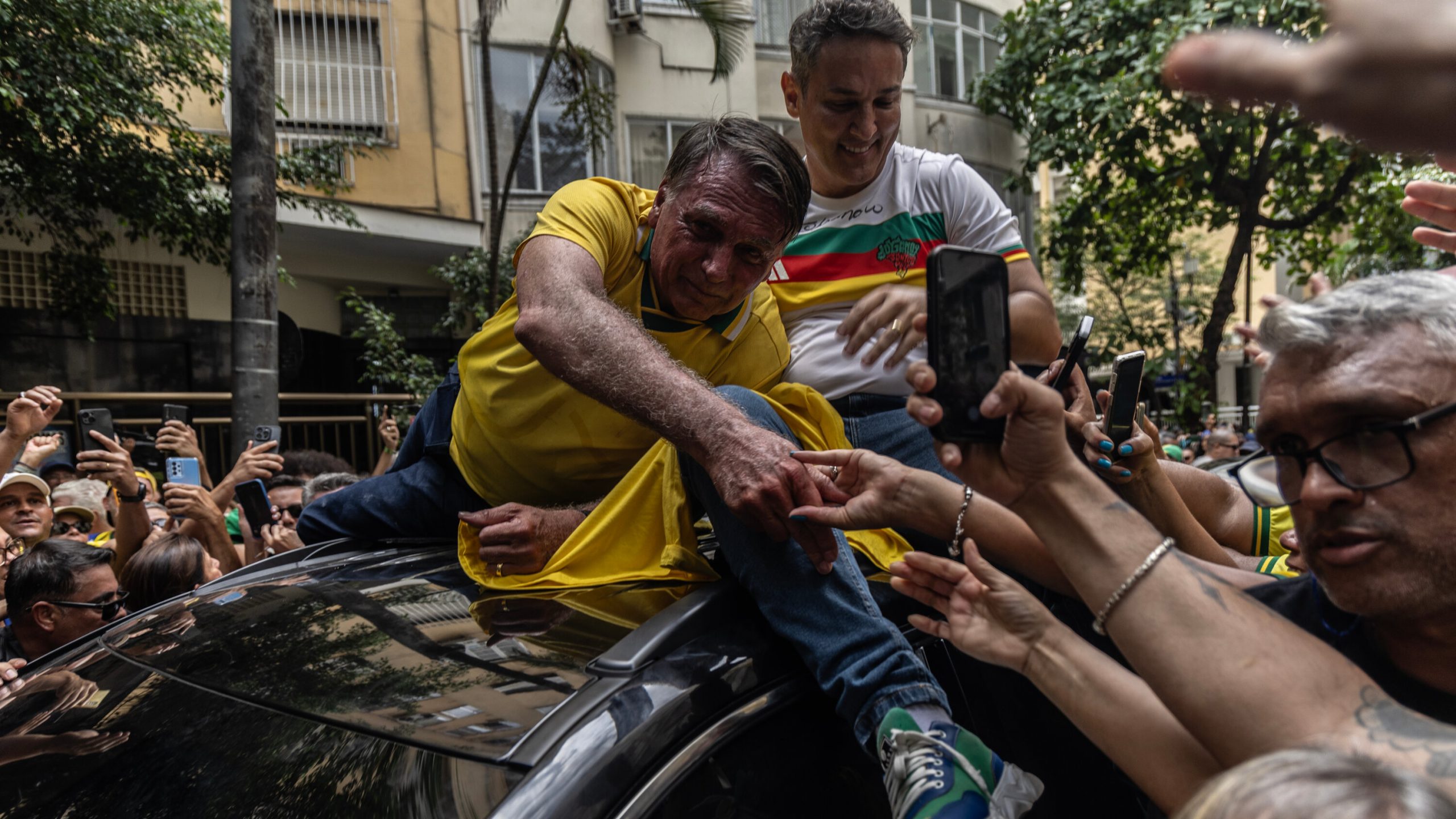
The decision for a Saturday arrest, particularly an early morning one, signals the Supreme Court’s perceived urgency and potential security considerations. Typically, Supreme Court justices, including the influential Justice Alexandre de Moraes who presided over the high-stakes coup case, tend to avoid issuing major decisions on weekends unless there are pressing security risks involved. This departure from conventional practice underscores the gravity of the situation and the potential for public unrest surrounding the former president’s imprisonment. Local media had widely anticipated that Bolsonaro, who governed Brazil from 2019 to 2022, would begin his sentence sometime in the following week, having exhausted all available avenues for appeal against his conviction for inciting the coup attempt.
The preemptive arrest does not, however, definitively mean that Bolsonaro will serve his entire sentence at the federal police headquarters. Brazilian law mandates that all convicted individuals must commence their prison sentences within a penal institution. Therefore, his transfer to a more permanent correctional facility is expected in due course, following standard legal procedures.
The political ramifications of Bolsonaro’s arrest are profound and immediately apparent. His son, Senator Flávio Bolsonaro, had been actively mobilizing supporters since Thursday, urging them to take to the streets in defense of his father, whom they claim is a victim of political persecution. As a result, significant rallies by Bolsonaro’s staunch base are anticipated to materialize outside the federal police headquarters throughout the weekend, potentially leading to confrontations and further destabilization. These supporters, a vocal and dedicated segment of the Brazilian populace, firmly believe that their former leader is being unjustly targeted by a politicized judiciary.
Bolsonaro, alongside several of his key allies, was found guilty by a panel of Supreme Court justices for his role in attempting to subvert Brazil’s democracy following his electoral defeat in 2022 to the incumbent President Luiz Inácio Lula da Silva. Prosecutors meticulously laid out a comprehensive coup plot, which reportedly included audacious plans to assassinate President Lula and to deliberately foment a widespread insurrection in early 2023. The charges also encompassed leading an armed criminal organization and attempting the violent abolition of the democratic rule of law – accusations that Bolsonaro has consistently and vehemently denied.
The events of January 8, 2023, often dubbed Brazil’s "January 6th" in reference to the U.S. Capitol riot, formed the centerpiece of the prosecution’s case. On that day, thousands of Bolsonaro supporters, refusing to accept the results of the 2022 election, stormed Brazil’s Congress, Supreme Court, and presidential palace in Brasilia. The violent invasion, which saw public property vandalized and symbols of democracy desecrated, was widely seen as a direct outcome of Bolsonaro’s months-long campaign to discredit the electoral system and sow doubt about the legitimacy of Lula’s victory. The former president’s rhetoric, characterized by unsubstantiated claims of electoral fraud and direct attacks on the judiciary, was deemed by the court to have actively incited the violent uprising. His refusal to concede the election gracefully, combined with his ambiguous statements before and after the events of January 8, solidified the court’s view of his culpability.
Despite his legal woes and the ignominy of his conviction, Bolsonaro remains a potent and influential figure in Brazilian politics. A separate ruling by Brazil’s top electoral court had already rendered him ineligible to contest elections until at least 2030, effectively barring him from seeking the presidency in the upcoming cycles. However, opinion polls consistently indicate that he would still command significant support and pose a formidable challenge in next year’s elections if he were permitted to run. His enduring popularity underscores the deep ideological divisions that continue to cleave Brazilian society.
The international dimension of Bolsonaro’s plight has been notably shaped by his close relationship with former U.S. President Donald Trump. Trump, a vocal ally, has repeatedly characterized Bolsonaro’s trial as a "witch hunt," mirroring the language he frequently employs to describe his own legal challenges. This solidarity extended to concrete policy actions. In July 2025, the U.S. administration, under President Trump, had threatened to impose a massive 50% tariff on several Brazilian exports, a move widely seen as an act of diplomatic pressure in defense of Bolsonaro. This threat was followed through later that month, with Trump signing an executive order on July 30, raising tariffs by 40%. The order explicitly cited the "political persecution of a former President of Brazil" by "Members of the Government of Brazil" as a justification for these punitive measures, thereby intertwining the domestic legal proceedings in Brazil with international trade relations.
However, in a surprising reversal just days before Bolsonaro’s arrest, on Thursday, November 20, 2025, President Trump signed another executive order. This new order removed the recently imposed tariffs on a range of Brazilian agricultural products, including beef and coffee. Trump’s explanation for this policy shift cited advice from "various officials" who suggested that "certain agricultural imports from Brazil should no longer be subject" to the 40% tariff, attributing the change, in part, to "progress the U.S. has made in its trade negotiations with Brazil." The order specified that it would apply to Brazilian imports to the U.S. on or after November 13, 2025. This abrupt change in tariff policy, coming so close to Bolsonaro’s anticipated imprisonment, added another layer of intrigue to an already complex geopolitical narrative.
The arrest of a former head of state on such severe charges represents a monumental moment for Brazil’s democratic institutions and its commitment to the rule of law. It sends a powerful message that even the highest office does not grant immunity from accountability, particularly when democratic norms are threatened. While Bolsonaro’s supporters will undoubtedly rally and continue to challenge the legitimacy of the judicial process, the Supreme Court’s firm stance underscores a determination to protect Brazil’s fragile democracy from future assaults. The coming days and weeks will be critical in observing how the nation navigates this unprecedented chapter, with the stability of its political landscape hanging in the balance.
Megan Cerullo contributed to this report.