Family feud surrounding Philippines president and his sister intensifies: That’s "not my sister"
Manila, Philippines – The political landscape of the Philippines, often characterized by intricate dynastic power plays, has been rocked by an unprecedented public family feud involving President Ferdinand "Bongbong" Marcos Jr. and his elder sister, Senator Imee Marcos. The bitter dispute escalated dramatically on Monday, November 24, 2025, when the President, in a visibly somber tone, outright refused to address his sister’s recent, explosive allegations that he has been a long-term drug addict whose cocaine dependence severely compromises his ability to govern. Instead, Marcos Jr. dismissed the source of the accusations with a chilling remark: "The lady that you see talking on TV is not my sister."
This astonishing statement by the sitting president came during a televised news conference where he initially tried to sidestep the personal attacks, stating, "It’s anathema to talk about family matters generally in public. We do not like to show our dirty linen in public." However, his subsequent comments, implying a profound disconnection or even a mental distress on his sister’s part, underscored the deep and increasingly public chasm that has opened within the powerful Marcos clan. The president further added, "That view is shared by our cousins, friends, that it’s not her. That’s why we are worried, we are very worried about her. I hope she feels better soon." When pressed on whether he intended to speak with her, Marcos Jr. simply stated that he and his sister "no longer travel in the same circles, political or otherwise," highlighting a personal and political estrangement that has reached a critical point.
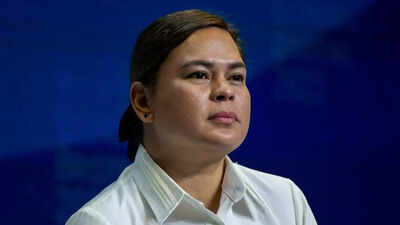
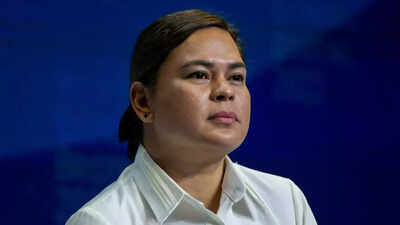
The origins of this highly personal and politically charged rift can be traced back to Senator Imee Marcos’s decision to publicly align herself with Vice President Sara Duterte, the daughter of the former president and an increasingly formidable political rival to Marcos Jr., particularly in the lead-up to the crucial midterm elections scheduled for May 2026. This alliance has effectively positioned Imee Marcos, a senator and scion of the same political dynasty, against her own brother’s administration, injecting a volatile new dynamic into Philippine politics.
The accusations themselves were delivered with considerable fanfare. Last week, Senator Imee Marcos, speaking before a massive religious rally in Manila, publicly claimed that her brother’s alleged drug addiction began during the presidency of their father, the late dictator Ferdinand Marcos Sr., and has continued unabated, impacting his health and governance. This accusation is not merely a personal slight; it strikes at the heart of the president’s legitimacy and capacity to lead. The context of these claims is also critical, as Communications Undersecretary Claire Castro quickly denounced Imee Marcos’s statements as "a web of lies." Castro suggested that the senator’s allegations were a desperate diversionary tactic, aimed at drawing attention away from ongoing investigations into a significant corruption scandal that could potentially implicate her opposition allies within the Senate. This counter-narrative suggests a calculated political maneuver rather than a genuine expression of concern for her brother’s well-being.
The specter of drug allegations is particularly ironic and potent in Philippine politics, given the recent history of the country under former President Rodrigo Duterte. Rodrigo Duterte, a harsh critic of President Marcos Jr. and the father of Vice President Sara Duterte, was himself arrested on an International Criminal Court (ICC) warrant in March 2025. He was subsequently flown to and detained in the Netherlands, facing charges of alleged crimes against humanity stemming from his brutal "war on drugs," which resulted in the deaths of thousands of mostly poor suspects. Duterte has consistently denied any wrongdoing, but his arrest has become a significant political flashpoint. His family and allies, including Senator Imee Marcos, have vociferously blamed President Marcos Jr. for what they contend was the ex-president’s illegal arrest and detention by the global court. This narrative intertwines the family feud with broader geopolitical tensions and questions of national sovereignty versus international justice, adding layers of complexity to the already strained relationship between the Marcos and Duterte camps.
President Marcos Jr.’s aides have previously asserted that he has tested negative for cocaine and methamphetamine, seemingly preempting such accusations. However, the familial source of these new claims gives them a different weight, forcing the president to address them, albeit indirectly. His refusal to directly counter the drug allegations and instead pivot to questioning his sister’s state of mind reflects a strategic decision to minimize the damage by casting doubt on the accuser rather than engaging with the substance of the accusation. This approach, while perhaps intended to protect the presidential image, simultaneously reveals the depth of the personal fracture.
The Marcos family, a name synonymous with Philippine political power for decades, has a history steeped in controversy and resilience. Ferdinand Marcos Sr. ruled the Philippines for over two decades, imposing martial law and presiding over an authoritarian era notorious for widespread human rights abuses, political repression, and allegations of massive corruption and plunder. He was eventually overthrown in 1986 by the largely peaceful "People Power" revolution and died in exile in Hawaii in 1989. His family, including his children Ferdinand Jr. and Imee, returned to the Philippines in 1991 and embarked on a slow, deliberate, and ultimately successful campaign to regain their political footing. Ferdinand Marcos Jr.’s landslide victory in the 2022 presidential election marked one of the most astonishing political comebacks in Philippine history, a testament to the family’s enduring influence and strategic rebranding.
This historical context makes the current feud even more significant. The Marcos family has historically presented a united front, particularly after their return to power, leveraging their collective legacy to rebuild their political brand. A public spat of this magnitude, featuring such damaging accusations from within the family, shatters that image of unity and exposes internal fissures that could have far-reaching implications for their political future. It suggests that personal animosities and competing political ambitions within the dynasty have now superseded the long-held tradition of presenting a monolithic, powerful front to the electorate.
The implications of this intensifying family feud are manifold. For President Marcos Jr., the accusations, regardless of their veracity, create a public relations challenge that could erode trust and confidence in his leadership, particularly among segments of the population already skeptical of his administration. His response, while attempting to deflect, also opens him up to criticism for not directly addressing serious allegations and for seemingly pathologizing his sister’s statements. The suggestion that "the lady that you see talking on TV is not my sister" is a deeply personal attack, casting Imee as either mentally unstable or under undue influence, a tactic that could backfire and generate sympathy for her.
For Senator Imee Marcos, her alignment with Sara Duterte and her willingness to publicly attack her brother mark a significant political gamble. It signals a clear break from the traditional family loyalty that has often defined political alliances in the Philippines. This move could strengthen the opposition bloc, particularly the alliance between the Marcos and Duterte factions that propelled Marcos Jr. to the presidency in 2022, is now fractured. The upcoming midterm elections will serve as a crucial test of strength for these evolving political alignments. If Imee’s accusations gain traction, or if the corruption scandal she is allegedly trying to distract from deepens, the political landscape could shift dramatically.
Moreover, the feud underscores the volatile and highly personalized nature of Philippine politics, where family ties and personal relationships often intertwine inextricably with national governance. The sight of a sitting president and his senator sister engaging in such a bitter public exchange, involving accusations of drug addiction and political sabotage, inevitably raises questions about the stability and focus of the government. It distracts from policy discussions, foreign relations, and pressing domestic issues, forcing the administration to contend with internal strife rather than external challenges.
As the nation approaches the midterm elections, this unprecedented family feud within one of the Philippines’ most powerful dynasties is set to dominate headlines and shape political discourse. It highlights the brutal realities of power struggles at the highest levels, where even the closest familial bonds can be severed in the pursuit of political advantage. The "not my sister" comment will likely echo through Philippine political history, symbolizing a moment of profound rupture and casting a long shadow over the future of the Marcos legacy. The coming months will reveal whether this internal conflict will merely be a temporary distraction or a fundamental realignment of political forces that could reshape the future of the Philippines.