At least 4 dead in blaze in Hong Kong residential high-rise complex with others trapped inside.
Hong Kong was gripped by tragedy and chaos on November 26, 2025, as a ferocious inferno tore through a high-rise residential complex in the Tai Po district, claiming the lives of at least four individuals and leaving an unspecified number trapped within the burning structure. The catastrophic blaze, which rapidly escalated to a No. 4 alarm fire – the second-highest level of severity in Hong Kong’s emergency classification system – sent plumes of thick, black smoke billowing into the evening sky, visible for miles across the densely populated urban landscape.
Authorities from the city’s Fire Services Department confirmed the grim toll, reporting four fatalities and three people injured in the devastating incident. Earlier reports from the police had indicated eight victims, highlighting the rapidly evolving and often confusing nature of such large-scale emergencies. The discrepancy in numbers underscored the immense challenges faced by first responders as they battled the flames and simultaneously conducted desperate search and rescue operations amidst the inferno. Among the deceased, unconfirmed media reports suggested that one victim was a dedicated firefighter, a potential loss that would send shockwaves through the city’s emergency services and underscore the extreme dangers faced by those on the front lines.
The Wang Fuk Court residential estate, a towering complex characteristic of Hong Kong’s vertical urban sprawl, became the epicenter of the disaster. Eyewitnesses described a scene of terrifying intensity as flames, initially reported mid-afternoon, quickly enveloped multiple floors of the building. The fire’s rapid and aggressive spread was significantly exacerbated by extensive bamboo scaffolding that had been erected around the exterior of the complex, likely for ongoing renovation or maintenance work. This highly flammable material acted as a massive wick, creating a vertical chimney effect that propelled the fire upwards with terrifying speed, turning the façade into a wall of fire.
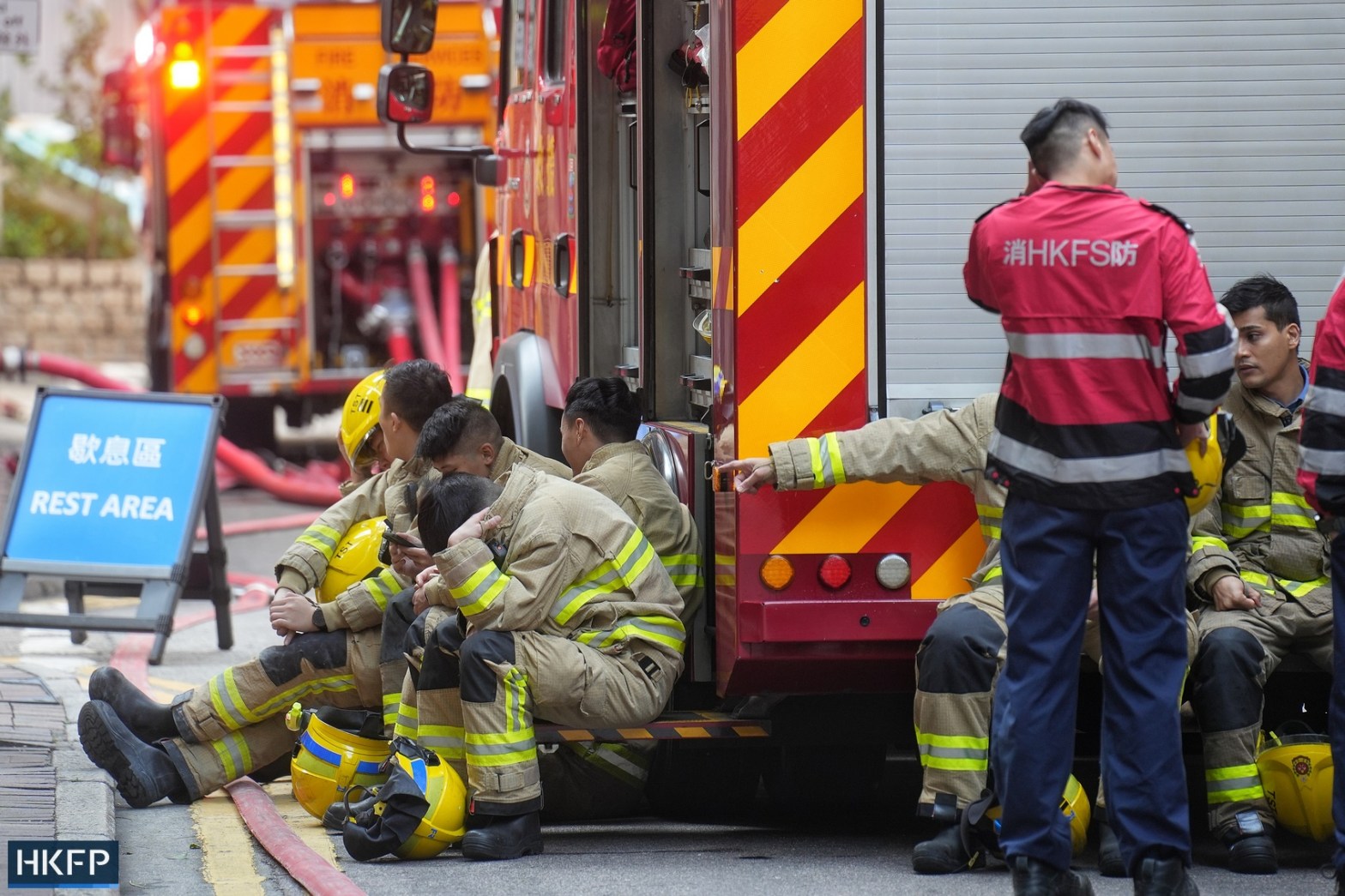
Live video footage from the scene painted a harrowing picture: gigantic tongues of flame licking at the darkening dusk sky, interspersed with showers of red-hot embers cascading to the ground below. Firefighters, arriving in force, deployed multiple ladder trucks, their powerful water jets arcing against the intense heat, desperately trying to contain the blaze and prevent further spread. The sheer scale of the fire, coupled with the inherent difficulties of battling a high-rise inferno, tested the limits of the city’s renowned emergency response capabilities.
The Hong Kong Fire Services Department (HKFSD) immediately launched a massive response, deploying scores of firefighters, numerous fire engines, aerial ladder platforms, and specialized rescue units. Their immediate priorities were multi-faceted: extinguishing the main body of the fire, preventing its spread to adjacent blocks, rescuing trapped residents, and providing medical aid to the injured. The thick smoke, a deadly byproduct of the conflagration, permeated stairwells and apartments, severely hampering visibility and posing a grave threat of smoke inhalation to those inside.
Police officers, working in conjunction with fire services, established a wide cordon around the affected area, diverting traffic and managing anxious crowds of onlookers and concerned relatives. They confirmed receiving multiple distress calls from individuals trapped within the affected buildings, heightening the urgency and gravity of the situation. The HKFSD, utilizing its official Facebook page, issued an urgent plea to nearby residents: "Please stay indoors and close doors and windows and stay calm and avoid going to areas affected by fire incidents." This directive underscored the potential for falling debris, toxic smoke, and the sheer scale of the emergency.
The Tai Po district, a suburban area nestled in the northern part of Hong Kong, close to the border with mainland Chinese city of Shenzhen, is known for its extensive residential estates, many of which are high-rise complexes. These buildings, while efficiently housing millions in one of the world’s most densely populated cities, also present unique challenges in terms of fire safety and emergency evacuation. The Wang Fuk Court, like many of its counterparts, is a testament to Hong Kong’s vertical living, but also a stark reminder of the inherent risks when fire safety protocols are compromised or unexpected accelerants like external scaffolding come into play.
High-rise fires are notoriously difficult to combat. Firefighters face challenges with water pressure at extreme heights, the sheer volume of space to search, the complex layout of residential units, and the potential for structural compromise. The bamboo scaffolding, a traditional and widely used material in Hong Kong construction due to its strength and flexibility, paradoxically became a major vulnerability in this incident. While robust for construction, its organic nature makes it highly combustible, and when integrated into the exterior of a building, it can act as a direct pathway for flames to spread vertically and horizontally across floors, bypassing internal fire compartmentalization.
The tragic incident immediately sparked concerns and questions regarding fire safety standards, particularly concerning external renovation work on high-rise residential buildings. While Hong Kong boasts stringent building codes and fire regulations, the reality of maintaining older structures and managing large-scale external works often presents complex challenges. Investigations into the precise origin and cause of the fire – whether it was an electrical fault, a cooking accident, or another ignition source – will undoubtedly be launched, alongside a thorough review of the role played by the scaffolding in the rapid escalation of the blaze.
For those trapped inside, the experience would have been terrifying. Reports indicated that at least one man and one woman were rushed to hospital unconscious, suffering from severe burns, offering a glimpse into the horrific injuries sustained by victims. The psychological trauma for survivors and witnesses will be immense, and the displacement of residents from potentially uninhabitable units will create significant logistical and humanitarian challenges for the local government and social services.
As night fell over Tai Po, the fire continued to rage in parts of the complex, with firefighters working tirelessly into the early hours, their efforts illuminated by the eerie glow of the flames and the flashing lights of emergency vehicles. The heroic efforts of the first responders, risking their own lives to save others, were on full display. The Hong Kong community watched with bated breath, hoping for more rescues, but also bracing for the grim possibility that the death toll could still rise as search operations continued into the charred remains of the high-rise. This devastating event serves as a stark reminder of the ever-present dangers in densely packed urban environments and the critical importance of robust fire prevention and emergency response systems.