U.S.-backed peace proposal is a starting point to end war in Ukraine, Putin says
Russian President Vladimir Putin on Thursday characterized the latest U.S. proposals aimed at ending the protracted conflict in Ukraine as a viable "starting point" for serious negotiations. Speaking to reporters at the conclusion of a three-day visit to Kyrgyzstan, Putin emphasized the necessity for a thorough and earnest discussion of the proposals, signaling a cautious but notable openness to diplomatic engagement after years of entrenched positions. He described former U.S. President Donald Trump’s comprehensive 28-point peace plan not as a finalized draft agreement, but rather as "a set of issues put forward for discussion," indicating areas ripe for negotiation rather than a take-it-or-leave-it ultimatum.
This statement, delivered from Bishkek, represents a subtle shift in Moscow’s public posture, which has largely maintained a hardline stance since the full-scale invasion of Ukraine. Putin reiterated Russia’s core condition for a cessation of hostilities: "If Ukrainian troops withdraw from the territories they occupy, hostilities will cease. If they don’t withdraw, we will achieve this by force." This phrasing is critically ambiguous, as Russia claims to have annexed four Ukrainian regions—Donetsk, Luhansk, Kherson, and Zaporizhzhia—parts of which it does not fully control. Ukraine, conversely, considers these territories sovereign and illegally occupied, making the definition of "territories they occupy" a central and highly contentious point of any potential talks.
Prior to these recent U.S.-led diplomatic overtures, Kremlin officials had offered minimal public commentary on the peace plan initially put forth by the Trump administration just last week. For much of the conflict, Putin has shown little willingness to deviate from his maximalist objectives in Ukraine, which include the complete withdrawal of Ukrainian forces from the entirety of the four annexed regions, including areas currently under Kyiv’s control. Additionally, his long-standing demands encompass preventing Ukraine from joining NATO, precluding the presence of any Western troops on Ukrainian soil, and ultimately, drawing Ukraine back into Moscow’s geopolitical orbit through enforced neutrality and demilitarization. These demands, if fully met, would fundamentally alter Ukraine’s sovereignty and security architecture.
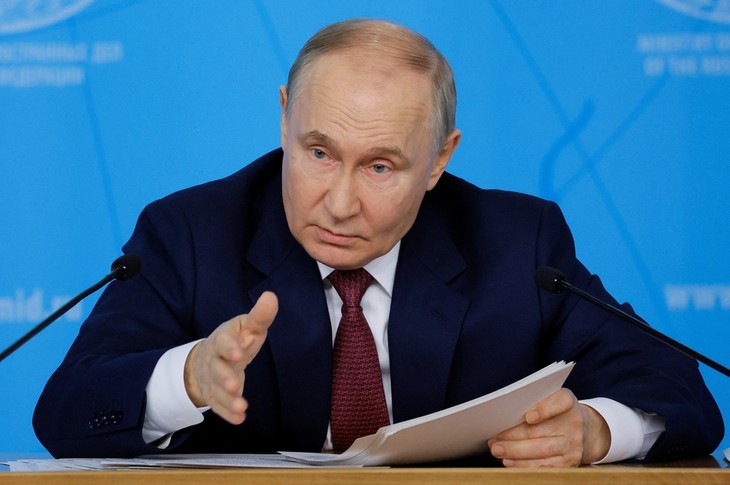
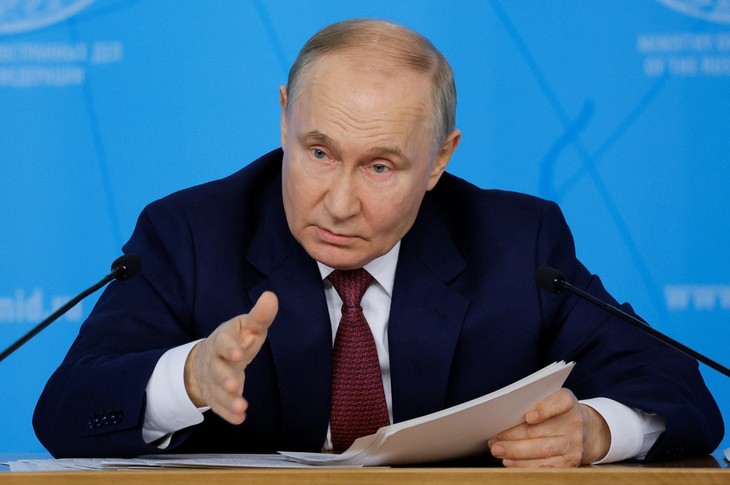
The image accompanying the report shows President Putin addressing the press during the Collective Security Treaty Organization Summit in Bishkek, Kyrgyzstan, on November 27, 2025, underscoring the timing and setting of his significant remarks.
On the diplomatic front, the coming weeks are expected to be active. The Kremlin has confirmed that U.S. special envoy Steve Witkoff is scheduled to visit Moscow next week, suggesting a direct channel for discussions on the peace proposal. Concurrently, U.S. Army Secretary Dan Driscoll, who has recently played a prominent role in the peace efforts, is reportedly considering a trip to Kyiv. These movements signal a multi-pronged U.S. diplomatic push, engaging both belligerent parties in a bid to find common ground.
The initial iterations of the U.S. peace proposals were reportedly perceived as heavily favoring Russian demands, sparking concerns among Ukraine’s allies. However, a revised version of the plan emerged from recent talks held in Geneva on Sunday, involving American and Ukrainian officials. This amendment suggests that Ukrainian concerns and input have been incorporated, potentially making the framework more palatable to Kyiv. Meanwhile, European leaders, many of whom have felt sidelined in the process and harbor deep anxieties about their own security amid ongoing Russian aggression, are actively maneuvering for greater involvement in these critical negotiations. Their desire for a more prominent role reflects the profound impact of the conflict on European stability and the necessity of ensuring any resolution addresses broader regional security concerns.
Analysts closely observing the conflict suggest that Putin’s current strategy involves attempting to outlast the commitment and resolve of Western countries to sustain their support for Ukraine’s war effort. Former President Trump himself has previously indicated a willingness to disengage from efforts to halt the fighting if no substantial progress is achieved, a factor that likely weighs on both Moscow and Kyiv. European officials, echoing a widely held view, posit that Putin is deliberately stalling, aiming to consolidate and expand Russia’s territorial gains in Ukraine before committing to any definitive peace agreement. This perspective suggests that any diplomatic engagement from Moscow might be a tactic to buy time rather than a genuine pursuit of immediate peace.
Despite these diplomatic developments, the reality on the ground remains one of continued, brutal fighting. Russian officials continue to assert that they possess battlefield momentum in Ukraine, framing their invasion as an unstoppable force. However, independent assessments largely contradict these claims. The Institute for the Study of War (ISW), a Washington-based think tank renowned for its detailed analysis of the conflict, cast significant doubt on Russian assertions this past Wednesday. The ISW reported that Russia is still struggling to achieve its objectives, particularly in capturing key cities in the eastern Donetsk region.
"Data on Russian forces’ rate of advance indicates that a Russian military victory in Ukraine is not inevitable, and a rapid Russian seizure of the rest of Donetsk Oblast (region) is not imminent," the ISW stated in its assessment. The think tank further noted that recent Russian advances along other sections of the front line have been largely "opportunistic," exploiting seasonal weather conditions—such as frozen ground enabling easier troop and vehicle movement—rather than demonstrating overwhelming strategic breakthroughs. This analysis underscores the immense human and material cost of Russia’s slow, grinding progress, highlighting that despite persistent efforts, its military objectives remain elusive.
The juxtaposition of these nascent diplomatic overtures and the unrelenting combat highlights the complex and often contradictory nature of the conflict. While Putin’s acknowledgment of the U.S. proposal as a "starting point" offers a flicker of hope for dialogue, the chasm between the parties’ core demands, coupled with the ongoing violence and strategic maneuvers on the battlefield, suggests that any path to a lasting peace will be fraught with significant challenges and require immense diplomatic skill and political will from all sides.