U.S. military blows up 2 more alleged drug boats in Pacific, killing 6 "narco-terrorists," Pentagon chief says
Updated on: November 10, 2025 / 12:01 PM EST / CBS/AFP
The U.S. military has escalated its controversial campaign against alleged drug traffickers, with Defense Secretary Pete Hegseth announcing Monday that U.S. forces killed six more individuals in strikes on two boats in the eastern Pacific. These latest fatalities bring the total death toll in this series of attacks, initiated under the Trump administration, to a grim 76. The incidents have sparked widespread condemnation from human rights organizations and international bodies, who decry the operations as extrajudicial killings lacking transparency and legal justification.
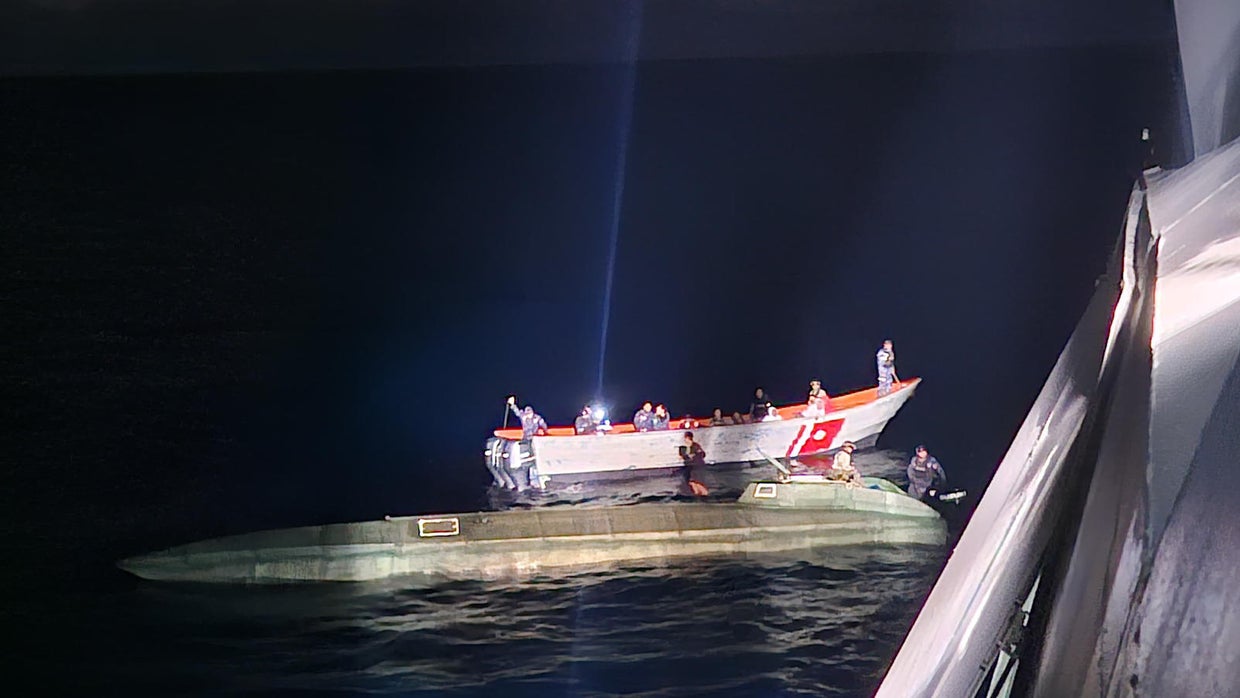
Secretary Hegseth, in a statement posted on X (formerly Twitter), revealed that the two strikes occurred on Sunday in international waters. He claimed that each of the targeted vessels was "carrying narcotics" and had three "male narco-terrorists" on board. "All 6 were killed. No U.S. forces were harmed," Hegseth stated, echoing the consistent narrative of U.S. operational success and zero casualties for American personnel. This pattern of swift, decisive action against suspected drug-running operations in the Pacific and Caribbean has become a hallmark of the administration’s aggressive anti-narcotics posture.
However, as with previous strikes in this ongoing campaign, U.S. officials provided no public information regarding the identities of those killed. Crucially, no concrete evidence was presented to substantiate the claims that the individuals were actively smuggling narcotics or posed a direct, imminent threat to the United States. This lack of transparency has fueled criticism from legal experts and human rights advocates, who argue that these operations circumvent established legal processes and international norms for law enforcement and conflict. They contend that even if the targets were known traffickers, the strikes amount to extrajudicial killings, bypassing arrest, trial, and due process. The very term "narco-terrorists" itself is a designation applied by the U.S. government, which critics argue is used to legitimize military action against individuals who, under international law, might otherwise be considered criminals subject to law enforcement, not combatants in a war.
Hegseth further asserted that the two destroyed vessels were "operated by Designated Terrorist Organizations," though he refrained from naming these specific groups. This broad classification forms the cornerstone of the Trump administration’s legal rationale for the strikes. In a notice to Congress, the administration previously declared that the United States is engaged in an "armed conflict" with Latin American drug cartels, thereby framing them as terrorist groups. This reclassification allows the U.S. military to treat these groups and their operatives as combatants, theoretically justifying the use of lethal force outside traditional law enforcement frameworks. However, this interpretation remains highly contentious, with many international legal scholars questioning whether drug trafficking, even by organized groups, constitutes an "armed conflict" under international humanitarian law or jus ad bellum principles, which govern the legality of going to war.
Video footage accompanying Hegseth’s post offered a glimpse into the operations. One clip depicted a strike on a stationary boat, while a separate, more dramatic video showed an open-top vessel exploding while underway. The color footage of the moving vessel appeared to show several parcels loaded inside, ostensibly narcotics, though the quality and context of the video did not allow for definitive identification of the contents or the individuals on board. The stationary vessel, shown in black-and-white thermal imaging, revealed even fewer discernible details. Critics argue that such limited, government-released video evidence is insufficient to justify the lethal force employed, especially given the allegations of civilian casualties.
With these latest incidents, the U.S. strikes have now resulted in the destruction of at least 20 vessels, comprising 19 boats and one alleged "narco sub." This significant number underscores the scale and intensity of the campaign. Secretary Hegseth reiterated the administration’s unwavering commitment: "Under President Trump, we are protecting the homeland and killing these cartel terrorists who wish to harm our country and its people." This statement encapsulates the administration’s perceived mandate: a direct, aggressive military response to perceived threats from drug organizations, framed as a matter of national security and homeland defense.
The kinetic operations have coincided with a substantial U.S. military buildup in the Caribbean, a move that has further amplified regional tensions. The U.S. has deployed six Navy ships to the region, sent F-35 stealth warplanes to Puerto Rico, and dispatched the USS Gerald R. Ford carrier strike group. This formidable display of naval and air power signals a robust and sustained military presence, far beyond typical anti-narcotics interdiction efforts. While Washington maintains its mission is solely to combat drug trafficking, several regional governments, most notably Venezuela, view these deployments with deep suspicion, interpreting them as a thinly veiled threat aimed at regime change against Venezuelan leader Nicolás Maduro.
Indeed, the humanitarian and political fallout from these strikes has been significant. Governments and families of those killed have consistently asserted that many of the deceased were civilians, primarily impoverished fishermen caught in the crossfire or mistaken for traffickers. These claims directly contradict the Pentagon’s narrative and deepen the controversy surrounding the legality and ethics of the operations. The accusations of civilian deaths raise serious questions about intelligence accuracy, rules of engagement, and accountability.
The U.S. posture has been particularly confrontational towards Venezuela. President Trump, in an interview with "60 Minutes" last week, notably responded "I would say yeah. I think so, yeah" when asked if Maduro’s "days were numbered." This thinly veiled threat, coupled with his confirmation last month that he had authorized covert CIA operations in Venezuela, underscores the broader geopolitical motivations intertwined with the anti-narcotics campaign. Many observers believe the drug interdiction efforts provide a convenient pretext for increased military presence and pressure on the Maduro regime, aligning with a long-standing U.S. policy objective of isolating and weakening the socialist government.
Internationally, the actions have drawn sharp rebuke. Volker Turk, the UN Human Rights Chief, on Monday urged Washington to investigate the legality of the strikes, warning of "strong indications" of "extrajudicial killings." In an interview with AFP, Turk stated, "I have called for investigations by the US administration first and foremost, because they need to… ask themselves the question: are these violations of international human rights law? Are they extrajudicial killings? I mean, there are strong indications that they are, but they need to investigate this." This is not the first time the United Nations has voiced its concern; Turk previously asked the United States to cease its campaign, asserting that the killings have taken place "in circumstances that find no justification in international law." These statements from the highest levels of the UN’s human rights apparatus highlight the serious challenge these operations pose to the international legal order.
Domestically, the Trump administration’s actions have largely been supported by its political base, but they have also generated significant congressional debate. Last week, Senate Republicans voted to reject legislation that would have imposed checks on Mr. Trump’s ability to launch an attack against Venezuela. This vote signaled a partisan divide, with Democrats pushing for Congress to assert a stronger oversight role in the high-stakes campaign against Maduro, arguing that such military actions should not be undertaken without explicit congressional authorization, especially given the potential for wider conflict. The executive branch’s expansive interpretation of its powers in this context continues to be a point of contention regarding war powers.
Adding another layer of pressure, the Trump administration in August doubled a bounty for Maduro, offering a staggering $50 million reward for his arrest, accusing him of drug-trafficking offenses. This financial incentive, combined with military pressure and covert operations, illustrates a multifaceted approach aimed at dismantling what the U.S. perceives as a narco-state in Venezuela.
The ongoing U.S. military campaign against alleged drug boats in the Pacific and Caribbean thus represents a complex blend of counter-narcotics efforts, geopolitical maneuvering, and a controversial reinterpretation of international law. While the administration champions its actions as vital for homeland security, critics point to the lack of transparency, the allegations of extrajudicial killings, and the potential for destabilizing regional relations. The ultimate effectiveness of these aggressive tactics in stemming the flow of narcotics, versus their cost in human lives and international legitimacy, remains a subject of intense global scrutiny and debate.