Cannon, coins recovered from ‘holy grail’ of shipwrecks that sank 3 centuries ago with billions of dollars in treasure.
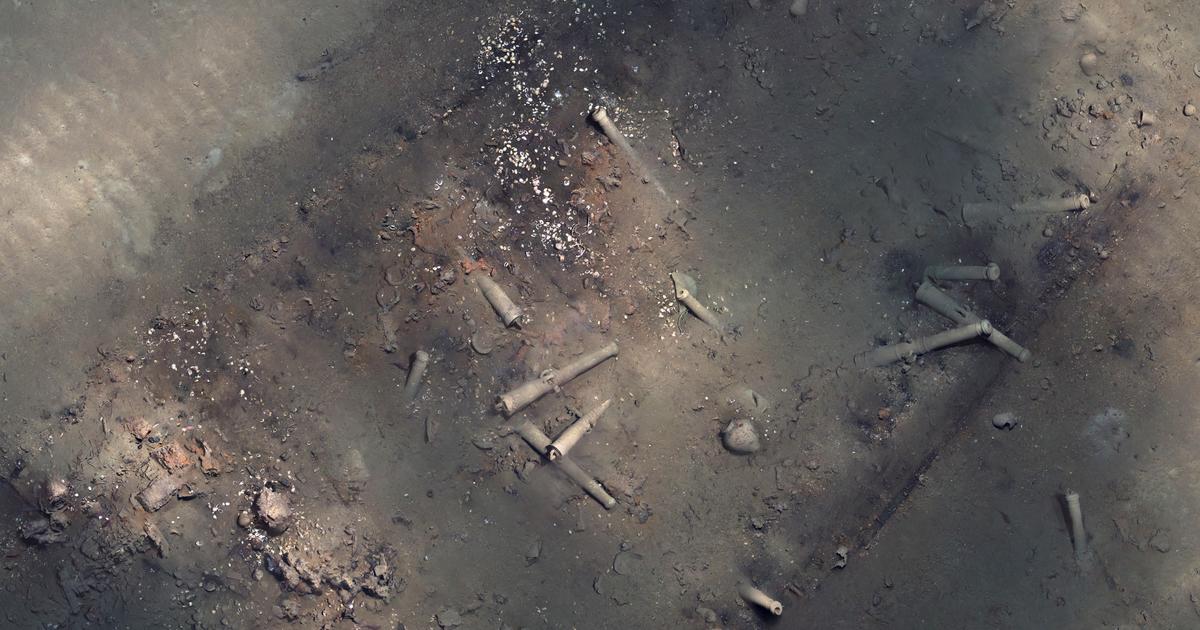
In a landmark moment for maritime archaeology and historical preservation, Colombian scientists have successfully recovered a cannon, three gold and silver coins, and a porcelain cup from the depths of the Caribbean Sea. These are the first tangible objects brought to the surface from the legendary Spanish galleon San José, a vessel often dubbed the "holy grail of shipwrecks," which met its demise more than three centuries ago in 1708. The ship, laden with an immense treasure from Spanish-controlled colonies, is believed to hold riches potentially worth billions of dollars, sparking decades of legal and diplomatic disputes.
The recovery, announced on Thursday, November 20, 2025, marks a significant step in a scientific investigation authorized by the Colombian government last year. This expedition aims not merely to salvage treasure, but to meticulously study the wreckage and unravel the precise causes of its sinking. The San José, a formidable 62-gun, three-masted galleon, was carrying an estimated 11 million gold and silver coins, emeralds, and other invaluable cargo when it was attacked by an English fleet on June 7, 1708, while en route from the New World back to Spain. Most of its crew tragically perished with the ship.
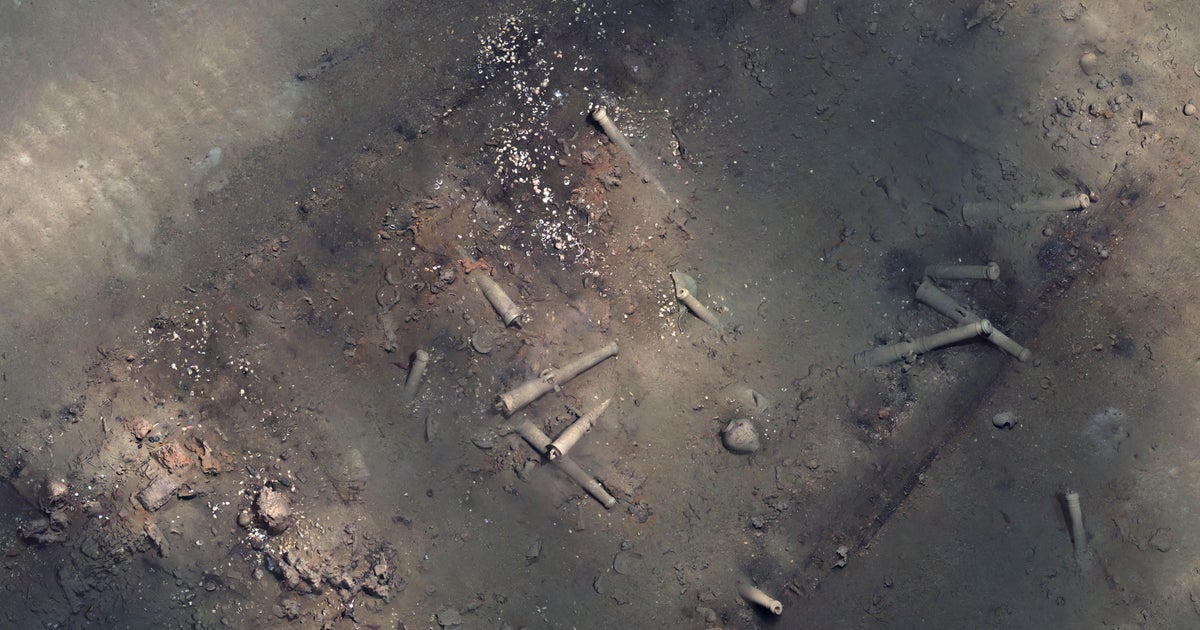
Colombian researchers initially located the elusive galleon in 2015, a discovery that ignited fresh fervor in long-standing international claims over its ownership and contents. The exact coordinates of the shipwreck, resting nearly 2,000 feet beneath the sea’s surface, remain a closely guarded state secret, a measure taken to protect the site from potential unauthorized treasure hunters and to maintain the integrity of ongoing scientific work.
The recovered cannon, with its historical markings likely to offer clues about its foundry and origin, the three intricately designed coins, and the delicate porcelain cup represent more than just valuable artifacts. They are crucial pieces of a puzzle that promises to shed new light on 18th-century naval warfare, colonial trade routes, and the material culture of the era. The Colombian culture ministry confirmed that these precious items will immediately undergo a rigorous conservation process at a specialized laboratory dedicated to the expedition. This meticulous treatment is essential to prevent further degradation after centuries in the corrosive deep-sea environment and to preserve them for future study and exhibition.
Yannai Kadamani Fonrodona, the Minister of Cultures, Arts, and Knowledge, underscored the profound significance of this achievement. In a statement, Fonrodona declared, "This historic event demonstrates the strengthening of the Colombian State’s technical, professional, and technological capabilities to protect and promote Underwater Cultural Heritage, as part of Colombian identity and history." His remarks highlight the government’s commitment to viewing the San José not merely as a trove of wealth, but as an irreplaceable cultural heritage site that embodies a critical juncture in global history.
The prevailing historical theory attributes the San José’s sinking to a massive explosion, likely of its gunpowder magazine, after being ambushed by an English squadron during a fierce naval engagement. However, the Colombian government, through its ongoing research, has put forth an alternative hypothesis, suggesting that the galleon might have succumbed to other factors, including severe structural damage to its hull, rather than a catastrophic internal explosion. This re-examination is fueled by conflicting historical accounts; British documents from the period reportedly indicate that the ship did not explode, a perspective supported by the Colombian government, while older Spanish reports suggest the vessel was indeed blown up during battle. Uncovering the true cause of the sinking is a key objective of the current scientific investigation, with the recovered artifacts potentially offering new forensic evidence.
The saga of the San José is not just one of historical discovery but also a complex web of legal and diplomatic contention. Multiple entities have laid claim to the shipwreck and its contents. Colombia asserts sovereign ownership, declaring the site a "protected archeological area" in May 2024. Spain, citing international maritime law and the ship’s origin, also claims ownership. Adding another layer of complexity are the Indigenous Qhara Qhara Bolivians, who argue that the vast treasures onboard, particularly the precious metals and gemstones, were extracted from their ancestral lands under colonial rule and rightfully belong to them.
Further complicating matters is the ongoing arbitration litigation between Colombia and Sea Search Armada (SSA), a group of U.S. investors. SSA claims to have initially discovered the wreck in 1982 and is seeking $10 billion, representing 50% of what they estimate to be the galleon’s total worth. This long-standing dispute highlights the contentious nature of deep-sea treasure, where the lines between salvage operations, archaeological research, and national heritage often blur. President Gustavo Petro’s government has firmly stated that its deep-water expedition is focused on research and the preservation of cultural heritage, not on the commercial seizure of the treasure, distinguishing its efforts from previous salvage-oriented claims.
Prior to this latest recovery, researchers had already made significant strides in analyzing artifacts linked to the San José. Earlier this year, intricately designed gold coins found near the wreck were definitively confirmed to be from the iconic galleon. Published in the journal Antiquity, the study detailed the coins’ distinctive features, including depictions of castles, lions, and crosses on the obverse, and the "Crowned Pillars of Hercules" above ocean waves on the reverse—symbols characteristic of Spanish colonial coinage of that period. These findings have further cemented the identity of the shipwreck and the immense historical value of its contents.
In 2024, Colombian authorities utilized a remotely operated vehicle (ROV) to survey the wreck, uncovering numerous artifacts such as an anchor, various jugs, and glass bottles. These earlier observations provided a clearer picture of the ship’s state and the types of cargo it carried, setting the stage for the more direct recovery efforts now underway. The government’s decision last year to begin extractions from the ship, employing multiple advanced ROVs, underscored its determination to meticulously document and preserve the site.
The San José, with its chests of emeralds and an estimated 200 tons of gold, represents a colossal snapshot of a bygone era, a floating museum of 18th-century global trade, imperial power, and naval conflict. Its recovery and the ongoing research offer an unprecedented opportunity to understand the mechanics of these grand galleons, the daily lives of their crews, and the vast economic networks that spanned continents. As Colombia continues its careful and scientifically driven exploration, the world watches, hoping that this "holy grail" will not only yield its material riches but also unlock profound historical insights for generations to come. The ethical considerations surrounding such discoveries, balancing commercial interests with cultural heritage and scientific inquiry, will undoubtedly continue to shape the narrative of the San José for years to come.